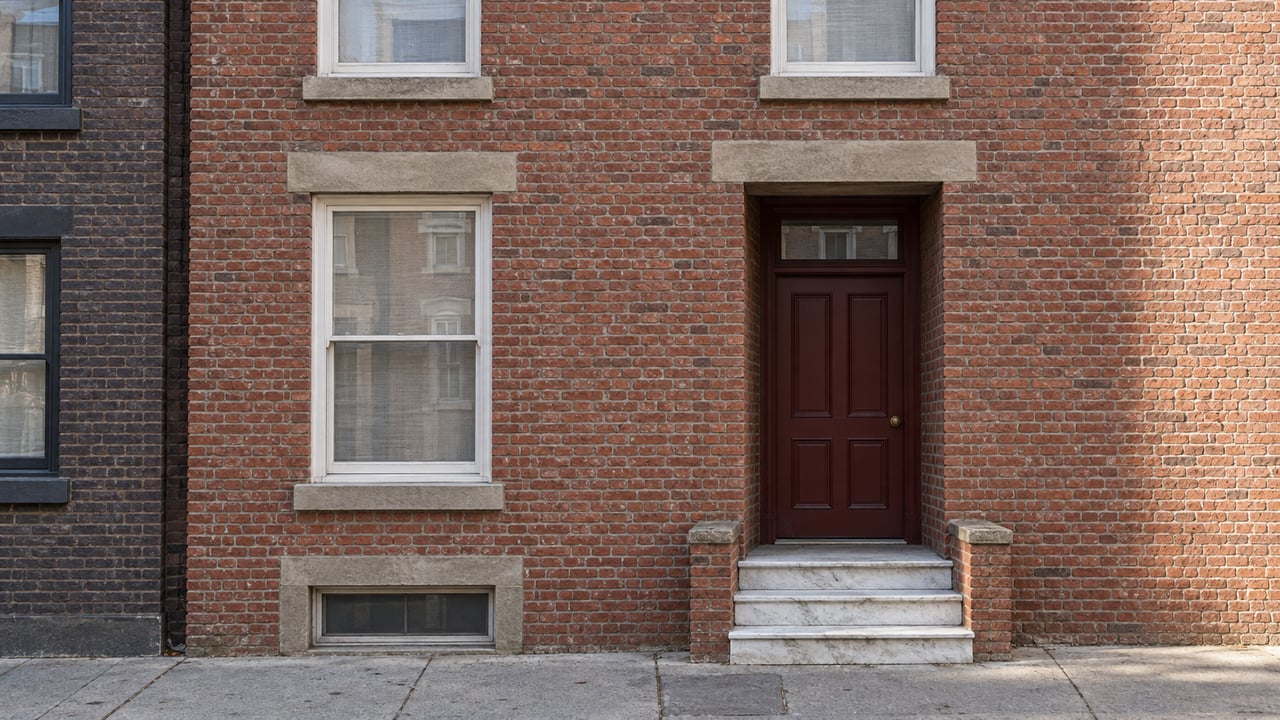
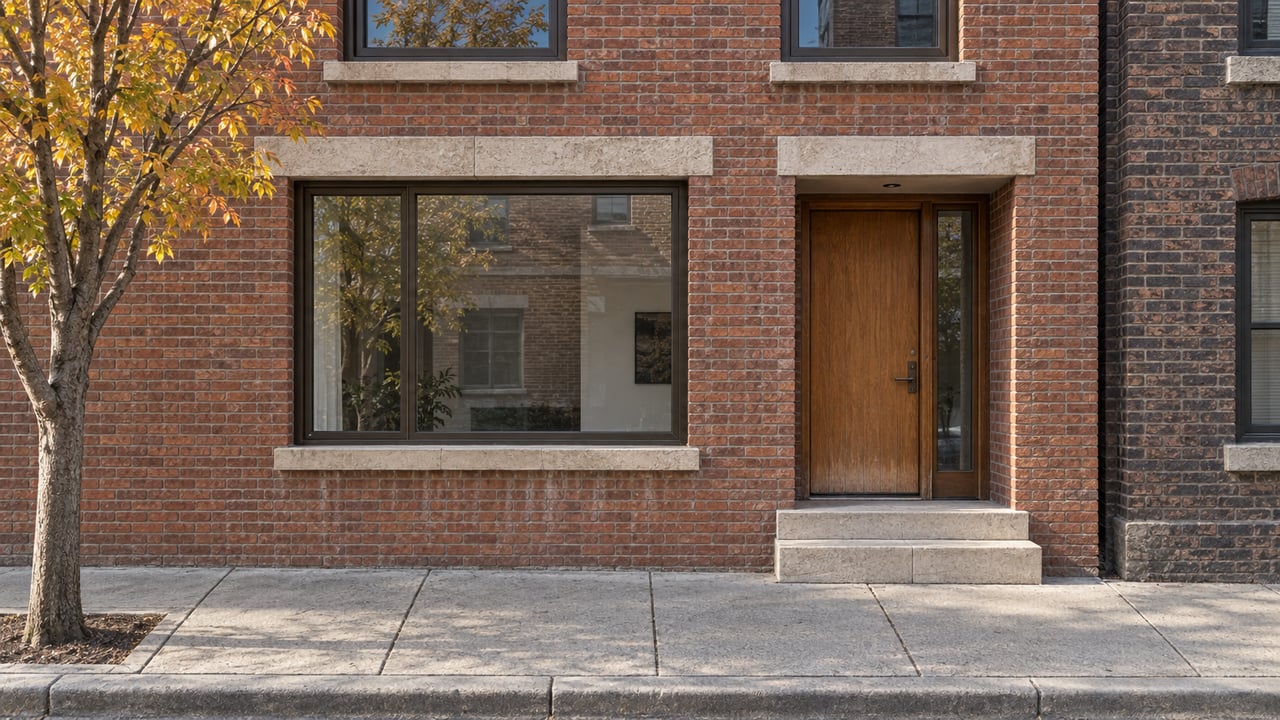
A Fishtown townhome finished this year can come with one of two tax schedules. One is a full ten-year exemption on the building. The other is an exemption that shrinks every year. A third kind of home is the resale with an abatement already running down. On a listing sheet, all three look like the same product: "new construction, tax abated." On a ten-year carrying-cost sheet, they are different purchases.
The year the house was built doesn't settle which schedule a home has. Under Philadelphia's code, the schedule depends on when the abatement application was first filed. A wave of permits pulled in late 2021 means some homes finished years later still qualify for the older, more generous terms. That window has a hard edge, and it arrives in December 2026.
The Date That Sets the Schedule Is a Filing Date
The new-construction abatement lives in Section 19-1303.4 of the Philadelphia Code. It covers only the assessed value tied to the cost of building the home. The land is assessed separately and stays taxable throughout.
The code splits homes into two groups by a single date. For applications first filed on or before December 31, 2021, 100% of the building's assessed value is exempt for ten years. The ten years start at settlement, once the certificate of use and occupancy is issued. For applications first filed after that date, the exemption starts at 100% and drops ten points a year, down to 10% in year ten. In both groups, the exemption ends after year ten.
The application is normally due within 60 days of the building permit being issued. Permit timing and the abatement schedule are closely linked, but they are not the same thing. The Office of Property Assessment, or OPA, values properties and handles abatement applications. The Department of Revenue bills the tax from OPA's assessment.
What the Two Schedules Cost on the Same House
Philadelphia's combined real estate tax rate is 1.3998%. The city says that total stays the same for 2027. At that rate, every $100,000 of building value that is fully taxed costs $1,399.80 a year.
Take two otherwise identical homes, each with $400,000 of assessed building value and the same land assessment. The table shows the yearly tax on the building portion alone, at today's rate. Land tax sits on top of both columns, and future rate changes would move every figure.
| Abatement year | Full schedule, filed by 12/31/2021 | Phased schedule, filed after 12/31/2021 |
|---|---|---|
| Year 1 | $0 | $0 |
| Year 2 | $0 | $560 |
| Year 3 | $0 | $1,120 |
| Year 4 | $0 | $1,680 |
| Year 5 | $0 | $2,240 |
| Year 6 | $0 | $2,800 |
| Year 7 | $0 | $3,360 |
| Year 8 | $0 | $3,920 |
| Year 9 | $0 | $4,479 |
| Year 10 | $0 | $5,039 |
| Year 11 onward | $5,599 | $5,599 |
Added up over the decade, the phased home owes about $25,200 more in building tax than the full-schedule home. That's 4.5 years' worth of the fully taxed amount, spread across years two through ten. Both homes reach the same bill in year eleven. Buyers who compare monthly payments using a first-year tax estimate will see identical numbers, because both schedules show $0 on the building in year one.
Why Homes Finished in 2026 Can Still Have the Old Terms
The full schedule should have disappeared from new listings years ago. It hasn't, because of the rush that came before the cutoff. Axios Philadelphia reported that the Department of Licenses and Inspections issued 900 new-construction permits in December 2021, compared with about 150 in a typical month. More than 2,600 permits were issued for all of 2021, against a typical year of about 1,600.
The Philadelphia Inquirer counted it by housing units instead. In its count, 10,939 units were permitted in December 2021 alone. The next month, that fell to 133.
Builders could not finish a month's worth of permits that size in a single season. Some of those projects are still delivering homes. The Inquirer's abatement mapping had already named Fishtown a hotspot for abated construction by 2015, so this neighborhood carries much of that pipeline.
Northbank shows how long the tail runs. Concordia Group and D3 are building this waterfront townhome community on Richmond Street, below Graffiti Pier. Billy Penn reported in 2022 that it was one of the last new developments to get in on the full ten-year abatement. Four years later, the developer's sales materials still promote the city's ten-year abatement. They list new townhomes starting in the mid-$600,000s and offer up to $45,000 toward closing costs or a rate buydown. The developer's description is a claim about the project. It doesn't confirm the abatement record of any single home, and each home's schedule is a parcel-level fact.
December 2026 Is When the Last Rush-Era Permits Expire
Philadelphia's building code gives these permits a firm time limit. Under Section A-302.2, a permit becomes invalid if work doesn't start within six months, or if work stops for six months. The code allows limited extensions. A construction permit issued under the Uniform Construction Code can be valid for no more than five years from its issue date. Count five years from the 900 permits issued in December 2021, and the last of them reach that limit in December 2026.
An expired permit costs more than a filing fee. A 2024 alert from the law firm Klehr Harrison listed what a developer can lose by having to pull permits again. The list included losing access to the pre-2022 abatement and falling under the newer rules.
So a single project can deliver homes under both schedules. Northbank's next phase at 2001 Richmond Street shows why buyers ask. The Civic Design Review submission dated October 6, 2026 calls for a new total of 219 single-family townhouse units. It cites site plans first dated December 15, 2021, revised in May 2026. A plan date is not an abatement application. Nothing in the public record reviewed here shows which schedule those homes will carry. A buyer in that phase would want the answer for their specific lot in writing.
Resale Abatements Are a Countdown
The third version is the home that already has an owner. The code says the exemption belongs to the property and does not end when the property is sold. A buyer inherits whatever years remain, on whichever schedule applies.
Fishtown listings have long advertised this. A 2020 Inquirer home-for-sale feature on a newly built Fishtown house pointed out that five years of abatement remained. That countdown has since run out. Listings still advertise remaining years the same way.
The years-remaining figure works differently for each cohort. On a full-schedule home, year seven still carries a $0 building tax, followed by a jump when year ten ends. On a phased home, year seven already carries 60% of the building's tax. Two resale homes that both say "four years left" can have very different bills today.
The abatement also affects what other relief a home can get. The city states that a home with a ten-year residential abatement can't receive the Homestead Exemption until the abatement expires.
The Land Line Is the Part That Moves
Every abated home in Fishtown pays tax on its land from the first year. That part of the bill follows reassessments. OPA posted Tax Year 2027 values on June 29, 2026, and they take effect January 1, 2027. The city estimated a change of about $97 for the median-valued residential property's tax bill.
The citywide median hides a wide range. The Inquirer's July 2026 analysis found a 3% citywide median increase in single-family assessments from Tax Year 2025 to 2027. Kensington, next door to Fishtown, had the largest neighborhood increase at 15.3%. The paper described the biggest increases as clustered in areas bordering hotter markets, Fishtown among them.
OPA's methodology says it typically assigns about 20% of assessed value to land. Its valuation used sales from January 2020 through June 2025. The deadlines to challenge 2027 values have passed. First Level Review closed September 1, 2026, and Board of Revision of Taxes appeals closed October 5, 2026. Anyone buying this fall takes on the 2027 values as they stand.
Checking a Specific House
- Search the address at property.phila.gov. The record shows the assessment, valuation history and a tax estimator. Land and building values are listed separately.
- The public record reviewed for this post did not show an abatement expiration date. OPA lists an inquiry form and phone number on each property record. Through either, a buyer can confirm whether an abatement was approved, which schedule applies, and when it ends.
- For a home still under construction, ask the builder for the abatement application date. The permit date or the year the plans were drawn won't settle it.
- Rerun the ten-year math with the home's actual building assessment and the current 1.3998% rate. Then add the land tax for every year.
FAQ
Does a full-abatement home stay full if it sells in year five?
Yes. The code attaches the exemption to the property, and it continues on its original schedule through a sale. The new owner gets the years that remain.
Is the city changing the abatement again?
As of the Inquirer's September 24, 2026 report, Mayor Cherelle Parker's proposed 20-year abatement had not been introduced as a Council bill. The proposal targets conversions of large deteriorated buildings, not ordinary new rowhomes.
Does the abatement cover land value increases?
No. Land is assessed separately and taxed under both schedules. That's why the 2027 reassessment changes bills on abated homes too.
If you own an abated Fishtown home, the years left and the schedule they're on are part of what a buyer is paying for, and they belong in your pricing. The Josh Allen Team can pull your property's assessment, work out what remains on your abatement, and show how that figures into your home's value. Get Your Home Valuation to start with the numbers.
This article is general information, not legal, tax or financial advice. Consult a qualified professional about your situation.