If you want a Center City home where history, transit, culture, and daily convenience all sit within a few blocks, living near Washington Square deserves a close look. For many buyers, this part of Philadelphia offers the kind of walkable lifestyle that is hard to match, but it also comes with real tradeoffs you should understand before you buy. This guide will help you sort out what Washington Square really means, what kinds of homes you will find nearby, and how to judge whether the area fits your day-to-day life. Let’s dive in.
What “Washington Square” Means for Buyers
When buyers say they want to live near Washington Square, they are often talking about two related but different places. Washington Square itself is the 6.4-acre public park bounded by Walnut and Locust Streets and 6th and 7th Streets, within Independence National Historical Park.
The surrounding residential and mixed-use area most buyers evaluate is Washington Square West. That broader neighborhood covers the Center City area between Broad and 7th Streets and Market and South Streets, with layers that include Midtown Village and the Gayborhood.
That distinction matters when you start your search. A home “near Washington Square” could mean steps from the park, or it could mean a location in the broader Washington Square West area that still benefits from the same walkable Center City setting.
Why Buyers Are Drawn Here
The biggest appeal of living near Washington Square is concentration. In a compact part of Center City, you get a major public park, historic streets, housing options, restaurants, offices, theaters, hotels, and strong transit access.
For buyers who want to spend less time driving and more time enjoying the city, that can be a major lifestyle upgrade. You are close to civic landmarks too, with Washington Square near Independence Hall, the Liberty Bell Center, and the broader Independence National Historical Park area.
This part of Philadelphia also feels layered rather than uniform. You have the quiet visual anchor of the square itself, but the surrounding blocks bring a more active, mixed-use city environment.
Washington Square’s Historic Character
Washington Square has deep roots in Philadelphia history. The National Park Service notes that it began as one of William Penn’s original five squares, later served as a burial ground for poor Philadelphians, soldiers, and yellow fever victims, and now includes the Tomb of the Unknown Soldier of the American Revolution.
That historic identity shapes the experience of living nearby. Even if you are buying for location and convenience first, the setting carries a strong sense of place that sets it apart from newer, more uniform urban districts.
You can see that character in the streetscape as well. Camac Street between Walnut and Locust is the city’s last remaining wood-block street, adding another distinct historic detail within the broader Washington Square West area.
Housing Styles Near Washington Square
If you are shopping in this area, expect a dense urban mix rather than one dominant home type. The 2024 Washington Square West historic district nomination described about 1,441 resources across roughly 26 blocks in a dense half-square-mile area.
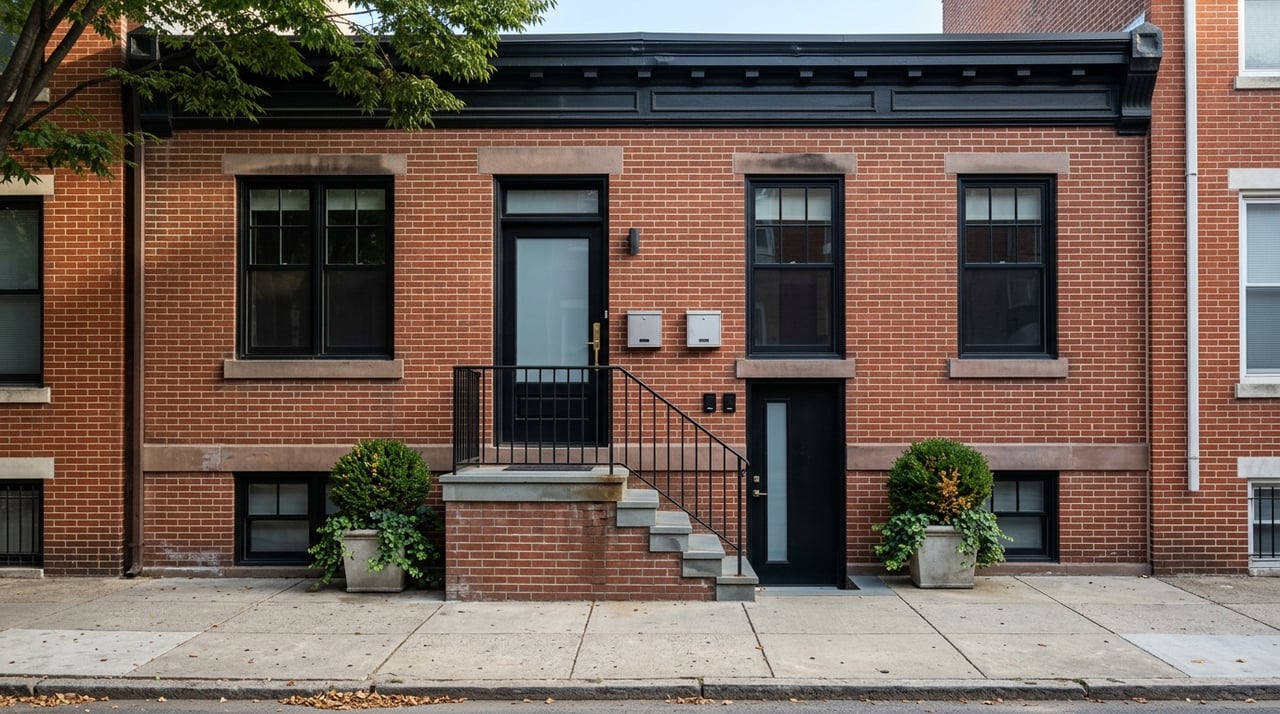
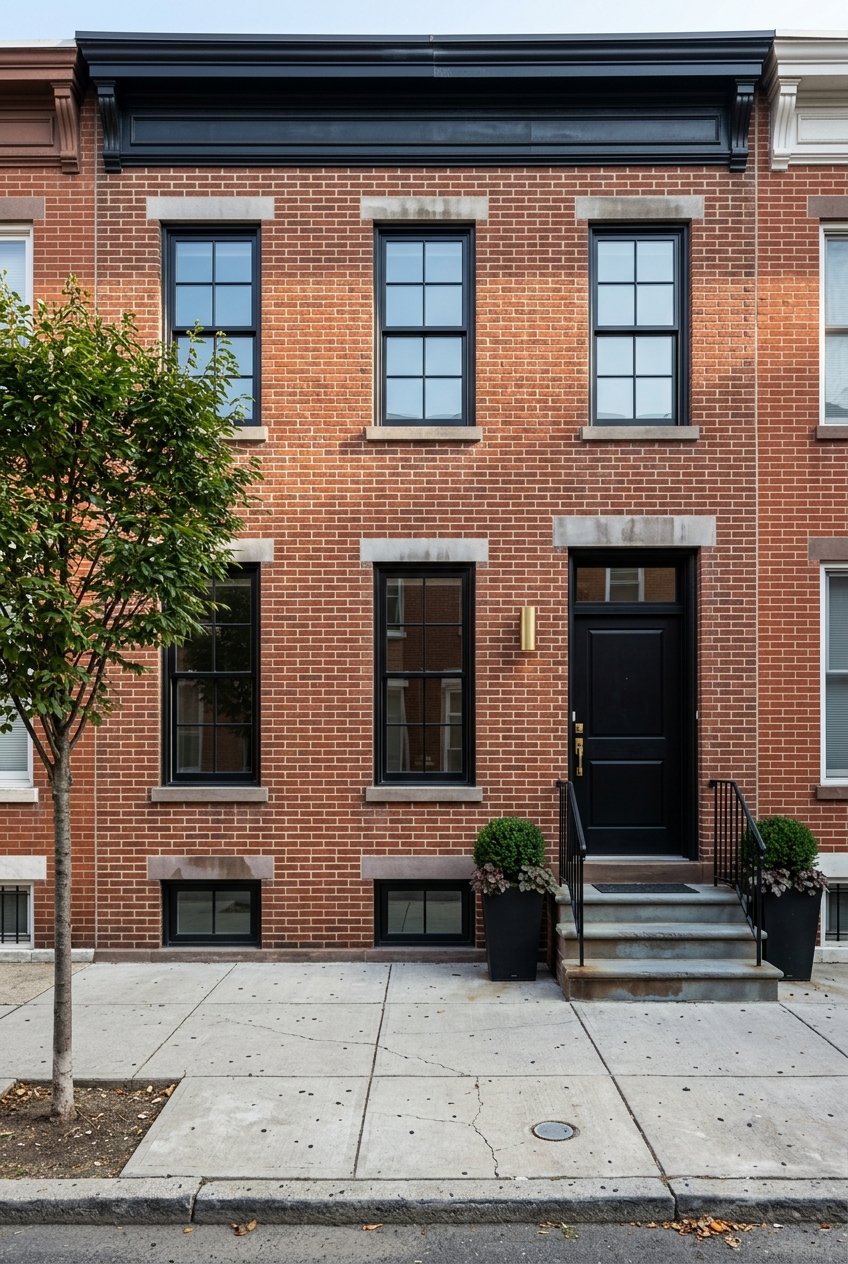
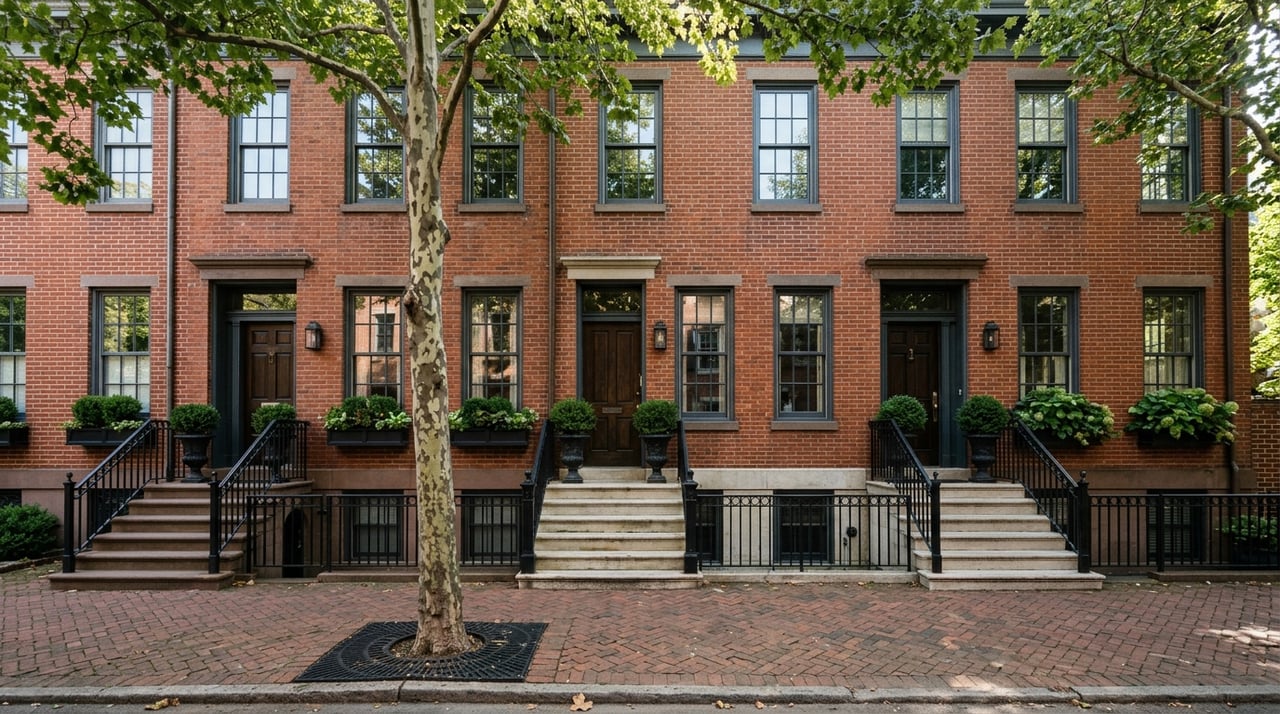
Federal and Greek Revival styles are especially common. Most buildings are brick rowhouses that are two to four stories tall and two to three bays wide, while taller commercial, office, and apartment buildings tend to cluster more at the northern and western edges.
For buyers, that usually translates into a few common paths:
- Smaller side-street rowhouses that are more likely to remain single-family
- Condominiums created through conversions of older buildings
- Apartment or condo living along larger streets
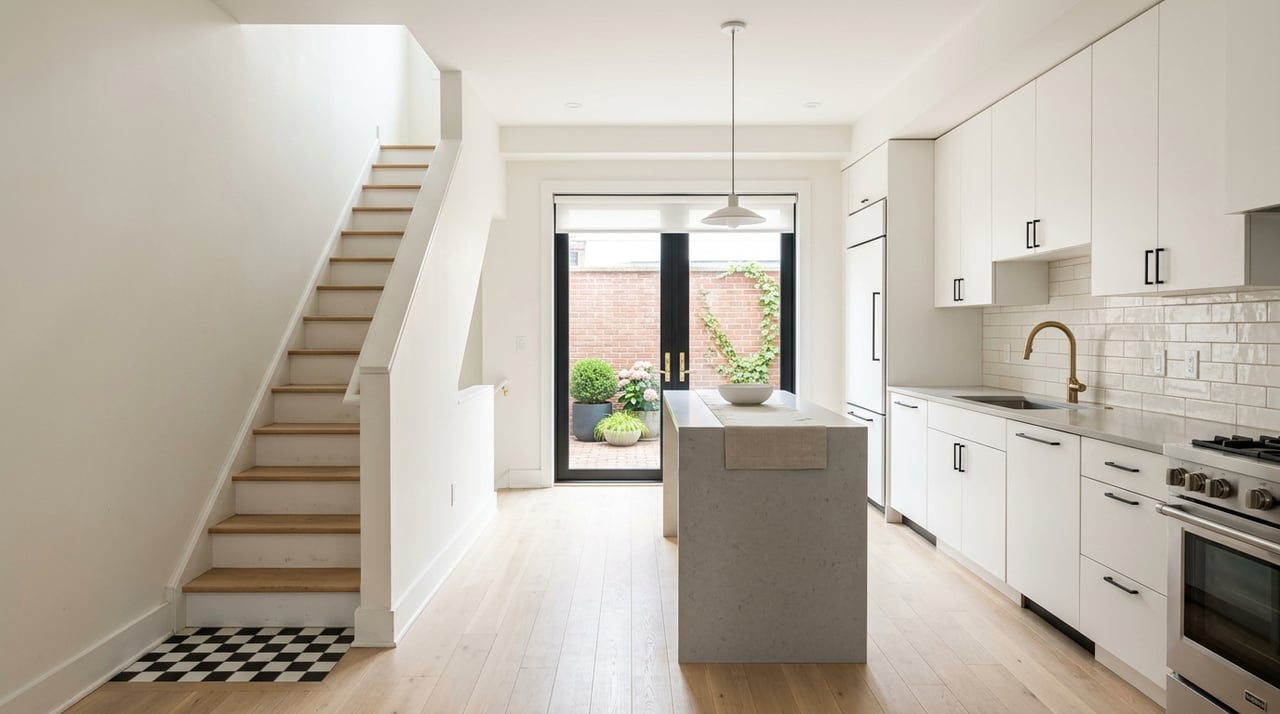
- Vertical living layouts, where space is spread across multiple floors rather than one wide footprint
This variety can be a real advantage. You may be able to choose between classic rowhouse character, lower-maintenance condo living, or a location closer to major commercial corridors.
What Daily Life Feels Like
Living near Washington Square means you are in the middle of a true Center City lifestyle. The park itself offers a landscaped green space that acts as a visual and social break from the surrounding city blocks.
Beyond the square, the neighborhood connects you to some of Philadelphia’s best-known cultural and commercial destinations. Nearby anchors include the Walnut Street Theatre, founded in 1808 and described as America’s oldest theatre, along with the broader Avenue of the Arts corridor on Broad Street.
Washington Square West also has a distinct neighborhood identity shaped by the Gayborhood, rainbow street signs, the William Way LGBT Community Center, and Philly AIDS Thrift at Giovanni’s Room. Together, these elements help explain why the area often feels more eclectic and more active than a purely residential pocket of Center City.
Transit and Getting Around
Transit is one of the strongest practical reasons buyers choose this area. Washington Square West is served by Jefferson Station, Market-Frankford Line stops at 8th, 11th, and 13th Streets on Market Street, plus numerous SEPTA and NJ Transit bus connections.
That level of access can make daily life much easier if you commute, travel often, or simply prefer to rely less on a car. For many buyers, strong transit helps offset the compromises that come with dense city living.
Walkability is a major part of the value here too. In a neighborhood where so many errands, meals, and cultural outings can happen within a short distance, your home can function as a base for city life rather than a place that requires constant driving.
The Main Tradeoffs to Consider
Every neighborhood has tradeoffs, and Washington Square West is no exception. The same density that makes the area convenient and exciting also creates a busier, more mixed-use environment than a quieter low-rise neighborhood.
If you are looking for a calm block with more separation from restaurants, offices, nightlife, and transit activity, some parts of the area may feel more active than you want. The neighborhood’s appeal is tied to how much is packed into a small footprint.
Parking is another practical consideration. Given the neighborhood’s dense form and transit-oriented layout, tighter parking conditions are likely compared with lower-density Philadelphia neighborhoods.
Space can also be a factor. Buyers who want large floorplans, private yard space, or an easier car-centered routine may find the area less ideal than buyers who prioritize walkability, historic character, and proximity to culture.
Historic District Questions to Ask
If you are buying an older home near Washington Square, historic status should be part of your due diligence. The preservation story in Washington Square West is active and still evolving.
The Philadelphia Historical Commission designated the district in September 2024. The Court of Common Pleas reversed that designation on February 26, 2026, and according to a Philadelphia Historical Commission staff report, the city appealed and as of March 30, 2026, the district was considered designated while the appeal proceeded.
That matters because the City of Philadelphia says historic designation generally requires Historical Commission approval for exterior changes and permit-related work. If you are considering updates to a façade, roof, windows, or other exterior elements, verify the current review process before closing.
A few practical questions can help:
- Is the property currently subject to historic review requirements?
- What exterior work has already been completed, and was it approved if required?
- Are there future projects you want that could need review?
- How might review timelines affect your renovation plans?
Who Washington Square Fits Best
This area tends to work especially well for buyers who want Center City access first. If you value walkability, transit, historic architecture, and being near restaurants, parks, and culture, Washington Square West can be a strong fit.
It may be especially appealing if you are comfortable with condo living or vertical rowhouse layouts. Buyers who see convenience and character as bigger priorities than yard space often respond well to this neighborhood.
On the other hand, buyers who need easy parking, larger floorplans, or fewer possible renovation constraints may want to compare Washington Square West with other Philadelphia neighborhoods before making a decision.
How to Buy Smarter Near Washington Square
A smart search here starts with clarity about your lifestyle. Before you tour homes, decide what matters most to you: being closest to the park, having stronger transit access, finding a single-family rowhouse, or keeping maintenance simpler with a condo.
It also helps to compare block-by-block feel, not just listing photos. In a dense Center City neighborhood, a few streets can make a meaningful difference in traffic patterns, building type, and the balance between residential and commercial activity.
Finally, pay close attention to the building itself, not just the address. In this area, the details matter: whether a rowhouse remains single-family or has been converted, whether exterior changes may require review, and how the layout fits the way you actually live.
Buying near Washington Square can be a great move if you want a true Center City lifestyle with history and energy built in. If you want help narrowing the right block, building type, and buying strategy, The Josh Allen Team can guide you with calm, local expertise.
FAQs
What is the difference between Washington Square and Washington Square West in Philadelphia?
- Washington Square is the 6.4-acre historic public park bounded by Walnut and Locust Streets and 6th and 7th Streets, while Washington Square West is the broader Center City neighborhood where most nearby housing is located.
What types of homes are common near Washington Square in Philadelphia?
- Buyers will typically find brick rowhouses, condo conversions, apartments, and some taller residential buildings, with smaller side-street rowhouses more likely to remain single-family.
Is living near Washington Square in Philadelphia good for transit?
- Yes. The area benefits from access to Jefferson Station, Market-Frankford Line stops at 8th, 11th, and 13th Streets, plus numerous SEPTA and NJ Transit bus options.
What should buyers know about historic district rules near Washington Square West?
- Buyers should verify whether a property is subject to current historic review requirements because exterior changes and permit-related work may require Philadelphia Historical Commission approval.
Who is a good fit for living near Washington Square in Philadelphia?
- The area often suits buyers who want Center City walkability, historic character, transit access, and proximity to parks, dining, and culture, and who are comfortable with denser urban living.
What are the tradeoffs of buying near Washington Square in Philadelphia?
- Common tradeoffs include a busier mixed-use environment, tighter parking, potentially smaller or more vertical layouts, and possible renovation constraints for historically reviewed properties.